Persistent facial redness can make otherwise healthy-looking skin appear irritated or uneven, while pigmentation and sun damage can add another layer of discoloration. When creams and everyday skincare are not giving you the improvement you want, BBL laser for facial redness may offer a more targeted approach. BroadBand Light treatments can address visible redness and unwanted pigment by delivering controlled light energy to specific concerns within the skin.
At Skintastic Med Spa, our approach is to match the treatment to the actual skin concern instead of treating every type of discoloration the same way. Facial redness, sun spots, pigmentation, uneven tone, acne-related inflammation, and melasma can look similar at a glance but may require different treatment strategies. A personalized assessment is therefore an important part of determining whether BBL is appropriate for your skin and goals.
So, can BBL laser for facial redness make a meaningful difference? BBL/IPL is specifically offered for concerns including redness, sun damage, pigmentation, and uneven tone, making it a relevant option when persistent redness occurs alongside an uneven complexion. The treatment is non-invasive, requires minimal downtime, and can be customized according to the concerns being addressed.
Jump To:
- TLDR Guide
- Detailed Breakdown
- How Does BBL/IPL Target Facial Redness?
- Can BBL Improve Uneven Skin Tone at the Same Time?
- When Could Forever Clear BBL Be Relevant?
- What Is the Role of Forever Young BBL?
- What Does Recovery After BBL Treatment Look Like?
- How Quickly Can You See a More Even Complexion?
- What If Your Uneven Tone Is Actually Melasma?
- Can BBL Treat Every Cause of Persistent Facial Redness?
- What Can Influence BBL Results?
- How Do You Know Whether BBL Is the Right Choice?
- Key Takeaways
- FAQs
TLDR Guide
BBL laser for facial redness uses targeted light energy to address visible redness and discoloration rather than simply covering them cosmetically. It can be especially useful when redness occurs alongside sun spots, pigmentation, or uneven tone because BBL/IPL is designed to improve several color-related concerns while promoting a clearer, brighter-looking complexion.
Here is the quick overview:
- BBL/IPL can target persistent redness, pigmentation, sun damage, and uneven tone.
- Treatment can be performed on areas including the face, neck, chest, and hands.
- Temporary warmth, flushing, tightness, or redness may occur immediately after a laser session.
- Redness and tightness generally begin settling during the following days.
- Improvements in tone and radiance can become more noticeable as the skin recovers.
- Some people benefit from multiple sessions rather than relying on a single treatment.
- Different causes of discoloration may require different technologies or treatment plans.
- A consultation helps determine whether BBL/IPL is appropriate for the specific redness or pigmentation you want to address.
BBL is therefore less about giving every patient the same “laser facial” and more about using controlled light energy strategically. The clearer the diagnosis of the cosmetic concern, the easier it is to build an appropriate treatment plan.
Detailed Breakdown
How Does BBL/IPL Target Facial Redness?
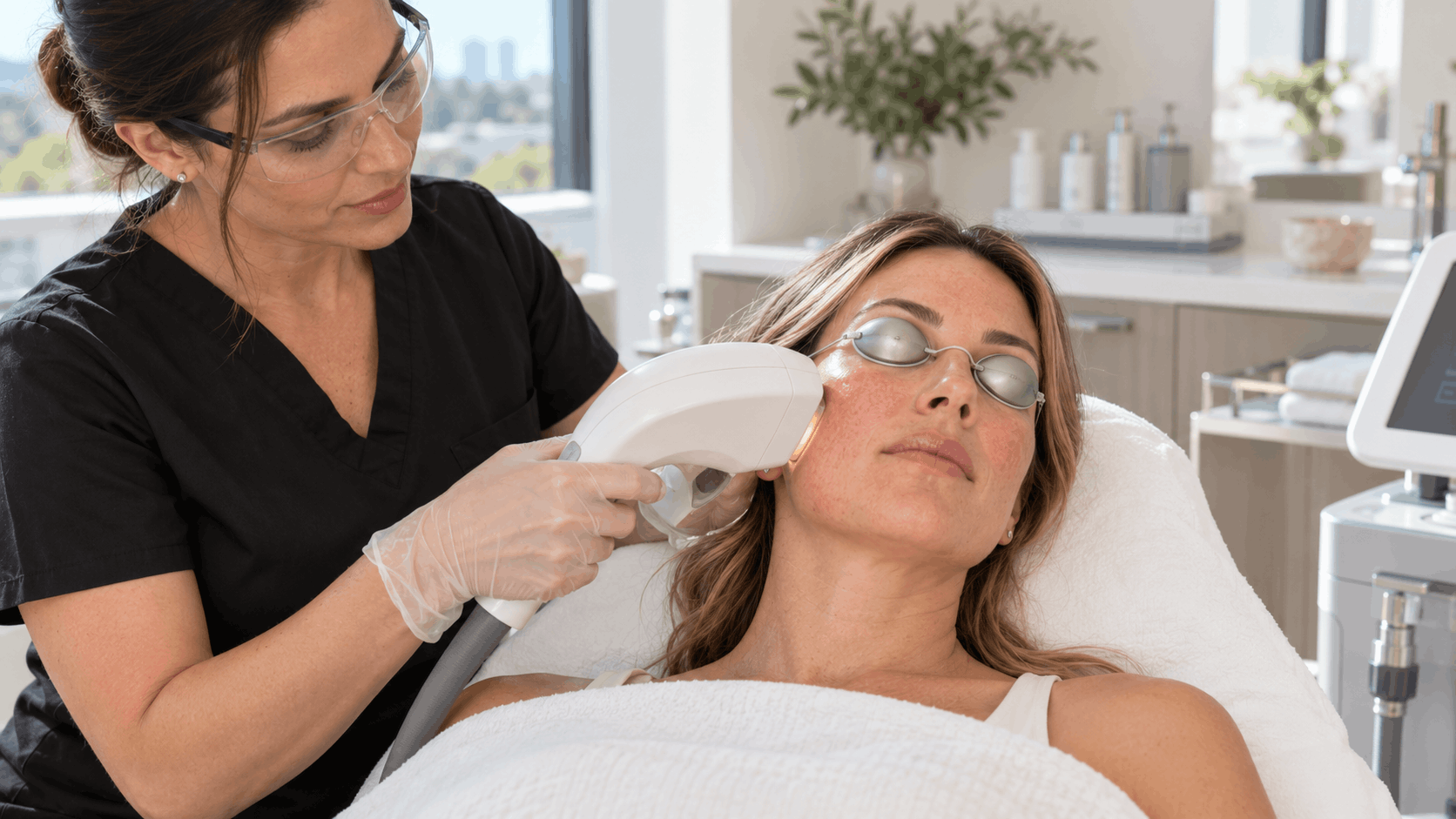
Despite the common phrase “BBL laser,” BroadBand Light is a light-based treatment rather than a traditional laser. BBL / IPL delivers targeted light energy to address unwanted color within the skin, including visible redness and pigmentation.
That targeted approach is what makes BBL laser for facial redness useful when the goal is a more even-looking complexion rather than simply changing skin texture. Our broader Laser Treatments page specifically describes BBL/IPL as targeting discoloration, sun damage, redness, and uneven tone, with applications on the face, neck, chest, and hands.
Because facial redness can have different causes, however, treatment should begin with an assessment. Persistent redness should not automatically be assumed to be the same concern in every patient.
Can BBL Improve Uneven Skin Tone at the Same Time?
This is one of the more useful aspects of BBL/IPL. Someone seeking treatment for facial redness may also have sun spots, areas of pigmentation, or a generally uneven-looking complexion.
BBL/IPL is designed to address several of those visible color irregularities within a personalized treatment plan. Our laser-treatment page lists fading redness and pigmentation and improving overall tone and brightness among the key benefits associated with BBL/IPL.
That means the goal can be broader than reducing one red patch. Treatment may help create a complexion that appears:
- Clearer
- Brighter
- More even in tone
- Less visibly red
- Less affected by unwanted pigmentation
Results still depend on the type and severity of discoloration, skin characteristics, treatment settings, and number of sessions.
When Could Forever Clear BBL Be Relevant?
Not all facial redness is isolated from breakouts. When redness appears alongside active acne, clogged pores, or acne-related inflammation, Forever Clear BBL may be a more relevant treatment pathway to discuss.
This distinction matters because treating acne-prone skin is different from treating isolated sun damage or generalized redness. A treatment plan should consider what is contributing to the skin’s appearance instead of targeting color alone.
For someone experiencing both breakouts and lingering redness, evaluating the acne component can help determine whether a more acne-focused BBL approach makes sense. That allows treatment selection to address the broader concern rather than focusing exclusively on one visible symptom.
What Is the Role of Forever Young BBL?
Forever Young BBL fits into the conversation when uneven skin tone appears alongside broader signs of visible skin aging.
Someone seeking BBL laser for facial redness may also be concerned about accumulated sun exposure, discoloration, or changes in overall skin quality. In that situation, treatment planning may look beyond redness alone and consider how multiple concerns contribute to the appearance of the complexion.
This is an important reason not to choose a BBL treatment by name alone. The better approach is identifying the concerns you want to improve first, then selecting the BBL protocol that best aligns with them.
What Does Recovery After BBL Treatment Look Like?
BBL/IPL is offered as a non-invasive treatment with minimal downtime, but minimal downtime does not mean the skin will necessarily look completely unchanged immediately afterward.
Our general laser guidance notes that treated skin may initially feel warm, tight, or flushed, similar to a mild sunburn. Depending on treatment intensity, temporary redness or light sensitivity may also occur.
During days two and three, redness and tightness generally begin easing. Slight dryness, flaking, or roughness may occur as the skin progresses through its recovery process.
By approximately days four through seven, smoother and more radiant-looking skin may become noticeable, with pigmentation beginning to fade and tone and texture appearing more refined. Individual responses vary, so these stages should be considered general expectations rather than a guaranteed day-by-day schedule.
How Quickly Can You See a More Even Complexion?
Improvement from BBL laser for facial redness should be considered progressive rather than instant.
Some of the first visible changes can become easier to appreciate once temporary post-treatment flushing settles. Our laser guidance indicates that pigmentation may begin fading and tone may look more improved during approximately days four through seven, while continued improvements can develop afterward.
This is also why before-and-after photographs can be useful. Subtle changes in redness and overall tone can be difficult to judge from memory when you see your face every day.
Multiple sessions may be recommended depending on the concern and desired level of correction. The objective is controlled, gradual improvement—not simply applying more energy in an attempt to force a faster result.
What If Your Uneven Tone Is Actually Melasma?
Pigmentation requires particularly careful treatment selection because “uneven skin tone” is a broad description rather than a specific diagnosis.
If melasma is contributing to discoloration, our Ultra Melasma Laser provides a treatment pathway specifically focused on melasma. That is different from assuming every brown patch, red area, or uneven section of skin should automatically receive the same BBL/IPL protocol.
This distinction can be particularly important when redness and pigmentation occur together. A professional assessment allows us to consider which concern is dominant, whether multiple issues are present, and which technology is better aligned with those findings.
Can BBL Treat Every Cause of Persistent Facial Redness?
No single aesthetic treatment should be treated as the answer to every form of facial redness.
BBL/IPL is specifically offered to improve visible redness and uneven tone, but persistent redness can have different underlying causes. Some concerns may be cosmetic and appropriate for light-based treatment, while others may require a different type of evaluation.
That makes consultation particularly valuable if redness is new, unexplained, worsening, uncomfortable, or associated with other symptoms. Cosmetic treatment should be based on an appropriate assessment rather than simply treating any red-looking skin with light energy.
What Can Influence BBL Results?
Several factors can influence the response to BBL laser for facial redness, which is why results should not be reduced to a guaranteed number of sessions or a single timeline.
Important considerations include:
- The cause and severity of the visible redness
- Whether pigmentation is also present
- Your skin characteristics
- Previous sun exposure and existing sun damage
- Treatment intensity and customization
- The number and spacing of sessions
- Post-treatment skincare
- Ongoing sun protection
Our laser guidance emphasizes protecting and hydrating the skin during recovery, following a gentle skincare routine, avoiding unnecessary sun exposure, and using consistent SPF as results develop.
These habits matter because successful treatment is not only about what happens during the appointment. How you protect your skin afterward can also influence the long-term appearance of pigmentation and overall tone.
How Do You Know Whether BBL Is the Right Choice?
Start with the concern rather than the technology.
If persistent redness, sun damage, pigmentation, and uneven tone are making your complexion appear blotchy, BBL/IPL may be worth discussing because those concerns align directly with how the treatment is presented within our laser services.
If acne is a major part of the picture, an acne-focused BBL treatment may deserve consideration. If melasma is responsible for the pigmentation, a melasma-specific strategy may be more appropriate. If several concerns overlap, treatment may need to be planned in stages.
The point of personalization is not to make treatment more complicated. It is to avoid treating different skin concerns as though they are interchangeable.
Key Takeaways
BBL laser for facial redness can be an appropriate option when the goal is to reduce the appearance of persistent redness while improving uneven skin tone, pigmentation, and sun-related discoloration. BBL/IPL uses targeted light energy and is offered as a non-invasive treatment with minimal downtime, while visible improvement can develop progressively as the skin recovers.
The most important points are:
- BBL/IPL specifically targets visible redness, pigmentation, sun damage, and uneven tone.
- Improving redness can also contribute to a clearer, more balanced-looking complexion.
- Temporary flushing, warmth, or redness can occur immediately after treatment.
- Visible tone improvements can become easier to appreciate after the initial recovery period.
- Multiple sessions may be appropriate depending on your concerns and treatment goals.
- Acne-related redness may call for an acne-focused BBL approach.
- Melasma should be distinguished from general pigmentation before selecting treatment.
- Consistent sun protection and appropriate aftercare support the treatment process.
The best results begin with identifying what is actually causing the uneven appearance. Once redness, pigmentation, acne-related concerns, and other sources of discoloration are properly differentiated, a more targeted treatment strategy can follow.
FAQs
Does BBL help with persistent facial redness?
BBL/IPL is specifically offered for concerns including visible redness, pigmentation, sun damage, and uneven skin tone. It uses targeted light energy to address unwanted discoloration and promote a clearer-looking complexion. Whether it is appropriate for persistent redness depends on the nature of the concern and your individual skin.
How many BBL treatments are needed for facial redness?
The appropriate number of treatments depends on the severity and type of redness, your skin characteristics, and the level of improvement being pursued. Our laser guidance describes BBL/IPL as delivering visible results over a series of sessions rather than promising that every concern will resolve after one appointment. A personalized consultation can establish a more appropriate treatment schedule.
Does BBL help uneven skin tone as well as redness?
Yes, BBL/IPL is offered to address both redness and uneven tone, along with concerns such as sun spots and pigmentation. Treating multiple visible color irregularities can contribute to a brighter and more balanced-looking complexion. The exact improvement depends on which concerns are present and how the treatment is customized.
Is there downtime after BBL for facial redness?
Our laser guidance describes BBL/IPL as having minimal downtime, although temporary warmth, flushing, tightness, redness, or sensitivity can occur after laser and light-based treatments. These early effects generally begin easing as the skin moves through recovery. Your provider can explain the expected recovery based on the specific BBL settings and treatment area.
When should I expect results from BBL laser for facial redness?
Results develop progressively, so the appearance immediately after treatment should not be considered final. Our general laser guidance notes that skin can look smoother and more radiant around days four through seven as pigmentation begins to fade and tone improves, with additional changes developing afterward. Your individual timeline can vary according to the concern being treated, treatment intensity, and number of sessions.